Best Jobscan Alternatives (Free & Paid 2026)
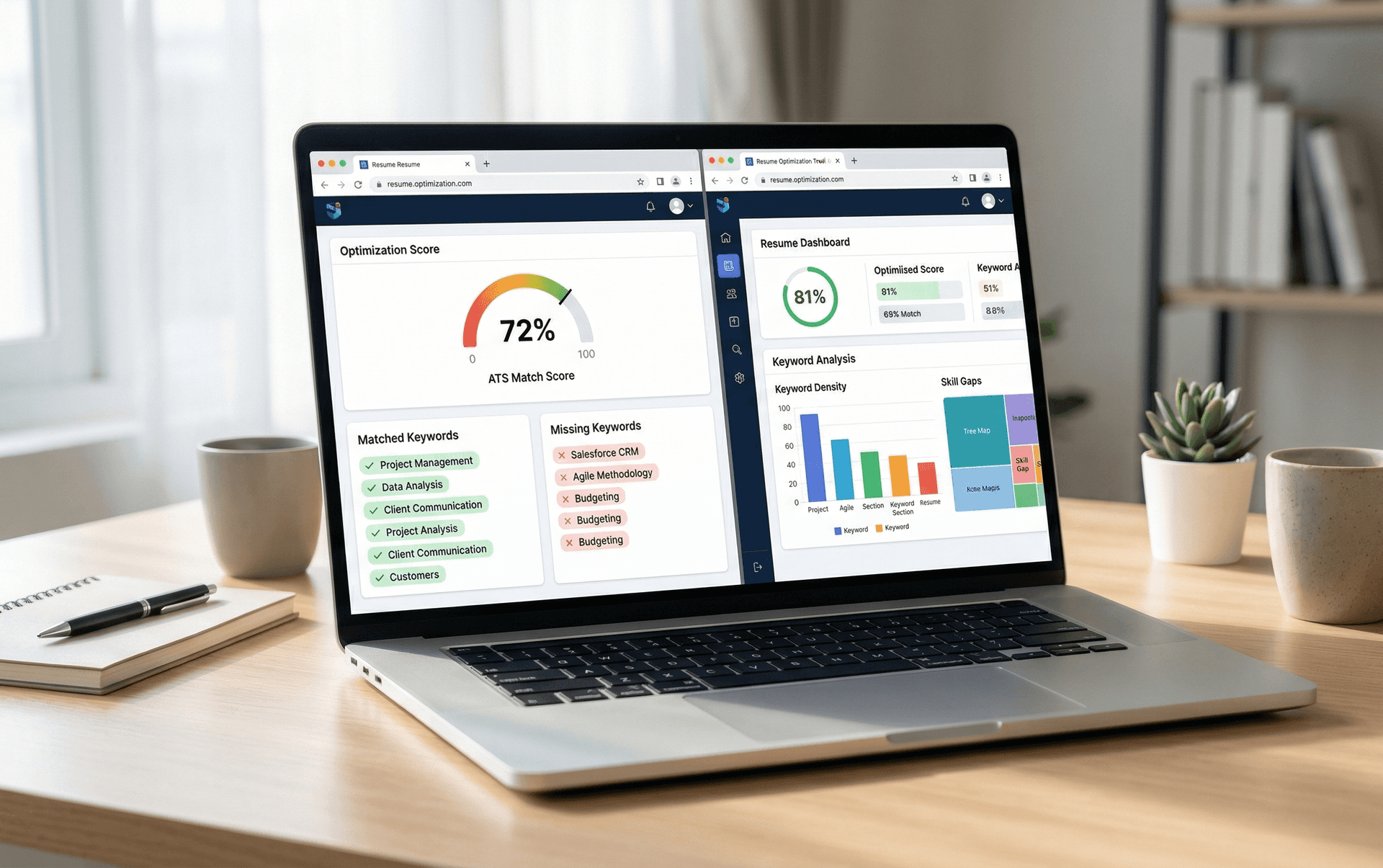
Jobscan has dominated the ATS resume checker market for years. But in 2026, job seekers are increasingly frustrated with its limitations: the credit-based pricing model that burns through scans quickly, the outdated keyword matching that misses context, and the lack of real-time feedback when you're iterating on your resume.
If you're looking for a Jobscan alternative, you're probably asking: Is there a tool that gives better match scores? One that doesn't charge per scan? One that actually helps you write your resume, not just critique it?
This guide breaks down the best Jobscan alternatives in 2026 — what they do differently, who they're best for, and which one will actually help you land interviews.
Why Look for a Jobscan Alternative?
Jobscan was revolutionary when it launched — it made ATS optimization accessible. But the tool hasn't evolved much, and its limitations have become more apparent as competitors innovate:
- Credit-based pricing: You pay per scan, which discourages iteration. Most job seekers tailor their resume 5-10 times per application, and Jobscan's model makes that expensive.
- Surface-level keyword matching: Jobscan focuses heavily on keyword density but doesn't evaluate how those keywords are used. Having "project management" doesn't mean much if it's buried in a generic bullet point.
- No content generation: Jobscan tells you what's wrong but doesn't help you fix it. You're left staring at a 60% match score with no clear path to 90%.
- Limited ATS simulation: Jobscan reverse-engineers some ATS systems, but it doesn't test against the wide variety of parsing engines used by Greenhouse, Lever, Workday, Taleo, and others.
The good news? Several newer tools have addressed these gaps.
What Are the Best Jobscan Alternatives in 2026?
1. ResumeBold — Best for AI-Powered Resume Building + ATS Checking
What it does: ResumeBold combines an ATS checker with an AI resume builder. Instead of just scoring your resume, it helps you write a better one — with tailored bullet points, keyword suggestions, and real-time formatting feedback.
Key features:
- Unlimited ATS scans (no per-scan charges)
- AI-powered bullet point generation based on your role and industry
- Real-time keyword optimization as you type
- Multi-ATS format testing (Greenhouse, Workday, Lever, Taleo)
- Export to PDF or .docx with ATS-safe formatting
Best for: Job seekers who want an all-in-one tool that helps them build and optimize their resume, not just check it.
Pricing: Free plan with limited features; Pro plan at $19/month with unlimited scans and AI writing assistance.
Why it's better than Jobscan: You're not just checking scores — you're building a resume from scratch with AI that understands ATS requirements. The unlimited scan model encourages iteration, which is how you actually improve your resume.
Try ResumeBold's ATS checker for free
2. Teal — Best for Career Management + Resume Tailoring
What it does: Teal is a full career management platform. It tracks your job applications, stores multiple resume versions, and includes an ATS resume checker that analyzes keyword matches and formatting.
Key features:
- Chrome extension that pulls job descriptions directly into your workspace
- Resume tailoring dashboard where you can create customized versions for different roles
- Job tracker to manage applications, interviews, and follow-ups
- ATS match score with keyword gap analysis
- LinkedIn profile optimization
Best for: Job seekers applying to many roles who need to organize applications and tailor resumes efficiently.
Pricing: Free plan with basic features; Teal+ at $29/month for advanced ATS analysis and unlimited resume versions.
Why it's better than Jobscan: Teal is a full job search system, not just a resume checker. If you're applying to 20+ jobs, the job tracker and tailoring workflow are invaluable.
3. Rezi — Best for Template-Based Resume Building
What it does: Rezi offers ATS-friendly resume templates with built-in keyword optimization. It scores your resume as you build it and suggests improvements in real time.
Key features:
- Pre-built ATS-safe templates for various industries
- Real-time content scoring (keyword density, bullet point strength, formatting)
- AI content suggestions for each section
- Auto-formatting to avoid ATS parsing errors
- Export to PDF or .docx
Best for: Job seekers who want a structured, template-based approach with built-in ATS checks.
Pricing: Free plan with limited features; Pro at $29/month.
Why it's better than Jobscan: Rezi integrates the ATS check into the resume-building process. You see your score update as you type, which makes optimization feel less like trial-and-error.
4. SkillSyncer — Best for Side-by-Side Job Description Matching
What it does: SkillSyncer compares your resume against a job description and highlights missing keywords, overlapping skills, and sections that need strengthening.
Key features:
- Side-by-side resume vs. job description comparison
- Missing keyword analysis with suggested additions
- Skill gap report showing which qualifications you're missing
- Simple, no-frills interface focused on keyword matching
Best for: Job seekers who want a straightforward keyword gap analysis without extra features.
Pricing: Free for basic scans; Premium at $49 for 3 months.
Why it's better than Jobscan: SkillSyncer's side-by-side comparison makes it easier to see exactly which keywords you're missing and where to add them.
5. VMock — Best for Students and Recent Grads
What it does: VMock is an AI resume reviewer used by universities and early-career job seekers. It scores resumes on structure, impact, and presentation, with detailed feedback on each bullet point.
Key features:
- Bullet point analysis (clarity, impact, quantification)
- Formatting and visual layout feedback
- Resume scoring across multiple dimensions (content, presentation, ATS compatibility)
- Targeted recommendations for entry-level resumes
Best for: College students, recent graduates, and early-career professionals.
Pricing: Often free through university partnerships; individual plans vary.
Why it's better than Jobscan: VMock focuses on entry-level resume best practices, which Jobscan doesn't specialize in. If you're a student, VMock's feedback is more relevant.
What to Look for in a Jobscan Alternative
Not all ATS checkers are created equal. Here's what actually matters:
1. Unlimited Scans (or Affordable Pricing)
You should be able to iterate on your resume without worrying about running out of credits. Pay-per-scan models discourage the experimentation that leads to better resumes.
2. Real-Time Feedback
The best tools score your resume as you write, not after you've finished a draft. Real-time feedback helps you make better decisions about keyword placement, bullet structure, and formatting.
3. Content Suggestions, Not Just Critiques
A tool that tells you "add more keywords" is less useful than one that suggests which keywords to add and how to integrate them naturally.
4. ATS Format Testing
Keyword matching is only part of ATS optimization. The best tools also test whether your resume will parse correctly across different ATS platforms (Greenhouse, Workday, Taleo, etc.).
5. Export Flexibility
You should be able to export your resume as a PDF or .docx without losing formatting. Some ATS systems prefer .docx; others handle PDFs better. Your tool should support both.
How ATS Resume Checkers Actually Work
Understanding what these tools actually do helps you evaluate them. Most ATS checkers use one or more of these methods:
1. Keyword Extraction and Matching
The tool scans the job description for keywords (skills, job titles, certifications, tools) and checks whether your resume contains them. It calculates a match score based on coverage.
Limitation: This method treats all keywords equally. Having "Python" 5 times isn't better than having it once in a strong, relevant bullet point.
2. ATS Parsing Simulation
The tool runs your resume through a parser that mimics how ATS systems extract information (name, contact info, work experience, skills). If the parser fails to extract critical fields, your formatting may have issues.
Limitation: No single tool can perfectly replicate every ATS system. There are dozens of ATS platforms, each with slightly different parsing logic.
3. Formatting and Structure Analysis
The tool checks for common ATS red flags: tables, text boxes, headers/footers, graphics, unusual fonts, or inconsistent section headings.
Limitation: Modern ATS systems are better at handling complex formatting than they were 5 years ago. Some tools over-correct by insisting on ultra-plain resumes that look dated.
Do ATS Checkers Actually Help You Get Interviews?
Yes — but only if you use them correctly.
ATS checkers are useful for identifying obvious gaps: missing keywords, formatting issues, weak bullet points. They're especially helpful when you're applying to large companies that use strict ATS filtering.
But they're not magic. A 95% match score doesn't guarantee an interview. ATS systems screen out unqualified candidates; they don't select the best ones[1]. That's still done by humans who evaluate your experience, achievements, and how well you tell your story.
The right way to use an ATS checker:
- Start with a strong resume: Write clear, quantified bullet points that demonstrate impact. Don't just keyword-stuff.
- Run an ATS check: Identify missing keywords, formatting issues, and gaps in coverage.
- Revise strategically: Add keywords where they fit naturally. Don't force them into unrelated bullets.
- Iterate: Run the check again. Aim for 80-90% match — going higher often means you're over-optimizing.
- Prioritize readability: Your resume still needs to impress the hiring manager who reads it after the ATS screens it.
Which Free ATS Checkers Actually Work?
If you're on a tight budget, several tools offer free ATS checks with limitations:
- ResumeBold: Free ATS checker with detailed scoring (limited features on free plan)
- Teal: Free basic ATS match analysis
- Resume Worded: Free resume review with ATS tips
- Jobscan: 1 free scan (requires sign-up)
Free tools typically limit the number of scans or depth of analysis, but they're enough to catch major issues.
Final Recommendation: Which Jobscan Alternative Should You Use?
- If you're building a resume from scratch: Use ResumeBold for AI-powered writing + unlimited ATS checks.
- If you're applying to many jobs and need organization: Use Teal for job tracking + resume tailoring.
- If you want structured templates: Use Rezi for template-based building with real-time scoring.
- If you just need a quick keyword check: Use SkillSyncer for side-by-side comparison.
- If you're a student or recent grad: Use VMock for entry-level-focused feedback.
The best tool depends on where you are in the process. Early in your search? Use a builder like ResumeBold or Rezi. Deep into applications? Use Teal to stay organized. Just need a quick check? SkillSyncer works.
The worst thing you can do is pick a tool that charges per scan and then avoid using it because you don't want to burn credits. Optimization requires iteration — pick a tool that encourages it.
References
- SHRM. (2024). Resume Keyword Matching in Applicant Tracking Systems. Retrieved from https://www.shrm.org/topics-tools/news/talent-acquisition
Ready to optimize your resume?
Check My ATS Score Free
Check My ATS Score Free